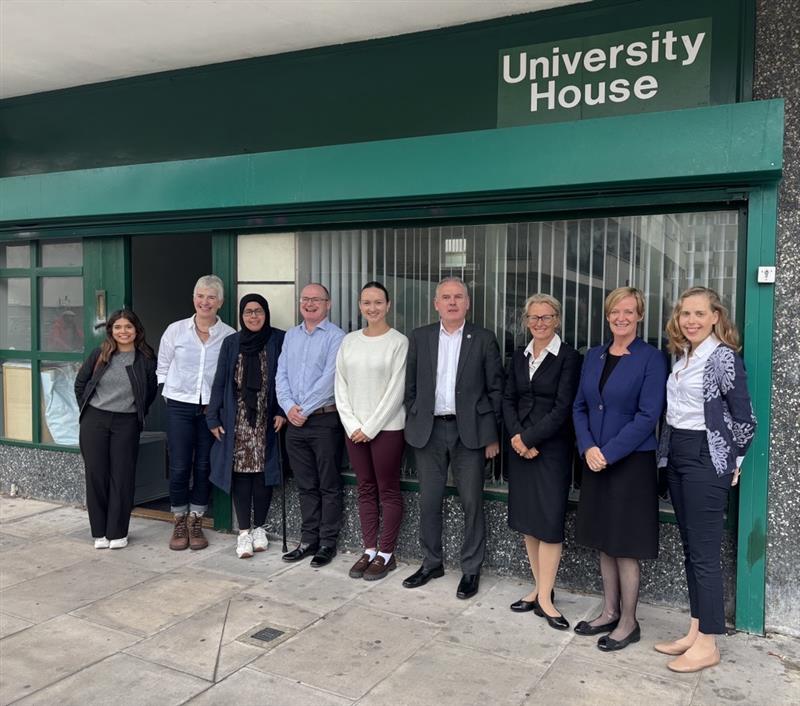
Recently, staff and members of the Legal Services Board visited University House’s free legal advice centre to learn about their innovative approach to delivering accessible legal services. What we discovered was a fascinating model that offers valuable lessons for the wider legal advice sector.
A Rich History with Modern Innovation
University House Legal Advice Centre has deep roots in the settlement movement, having been established by students in the 1800s. While it operated entirely on a pro bono basis for much of its history, the centre evolved approximately 20 years ago to include employed lawyers. Today, it operates on a balanced model—roughly 50% staffed by employed solicitors and 50% supported by volunteer lawyers.
The Funding Challenge: Diversification is Key
One of the centre’s most striking achievements is its relatively stable funding position. Unlike many advice agencies that depend heavily on legal aid contracts, University House has built a diverse funding portfolio that includes:
- Corporate partnerships: The centre has cultivated strong relationships with 32 law firms whose employees provide end-to-end casework. This level of corporate engagement is rare—only about 12% of clinics achieve similar partnerships.
- Unconventional funding sources: The centre has successfully tapped into innovative streams such as Section106 funding, demonstrating creative thinking about resource mobilisation.
- Project-based funding: They secure grants from local councils and other sources for specific advice projects, creating multiple income streams.
A Volunteer Model That Works
With 135 volunteer lawyers currently active, the centre has developed an efficient system: cases are distributed via email to partnering lawyers who pick them up as their capacity allows. This model achieved a 98% success rate in the past year.
The centre’s approach to benefits cases is particularly instructive. They recognise that while these cases require significant ‘lawyer skills’, they don’t always involve complex legal questions. In this context, providing volunteer lawyers with relevant training in benefits related law, makes it feasible for pro bono lawyers to take cases from start to finish. Crucially, the centre provides supervision and insurance, meaning the risk sits with them rather than individual firms—an arrangement that encourages participation.
Extending Reach Through Partnership
University House demonstrates that location needn’t limit impact. For their remote clinics, they’ve developed relationships with community groups who provide wraparound support to clients, enabling the London-based centre to deliver nationwide services effectively. They’ve also created an online advice portal through which organisations can make referrals, providing another accessible entry point for people seeking help.
Looking Ahead: Challenges and Opportunities
Our visit highlighted several areas warranting wider sector consideration:
Legal Expenses Insurance (LEI): There’s a notable gap in perspective between commercial providers and advice agencies regarding LEI rates. What commercial sectors consider insufficient can be more than adequate for non-profit providers. Questions were also raised about how the legal services sector could better engage with insurers to standardise coverage offerings, so people are clearer about the coverage they have, and explore how non-profit actors might join insurance panels.
Workforce Development: In the absence of Level 7 apprenticeship programs, the non-profit sector is increasingly looking toward the CILEX pathway as an alternative route for developing legal professionals.
Lessons for the Sector
University House’s model offers several transferable insights: the value of diversified funding streams, the potential of structured pro bono partnerships, the importance of risk-sharing arrangements that encourage volunteer participation, and the possibility of extending geographic reach through community partnerships and on-line services.
As we continue our work at the Legal Services Board to support a diverse and sustainable legal services sector, models like University House remind us that innovation, partnership, and creative resourcing can create lasting impact.
More stories


