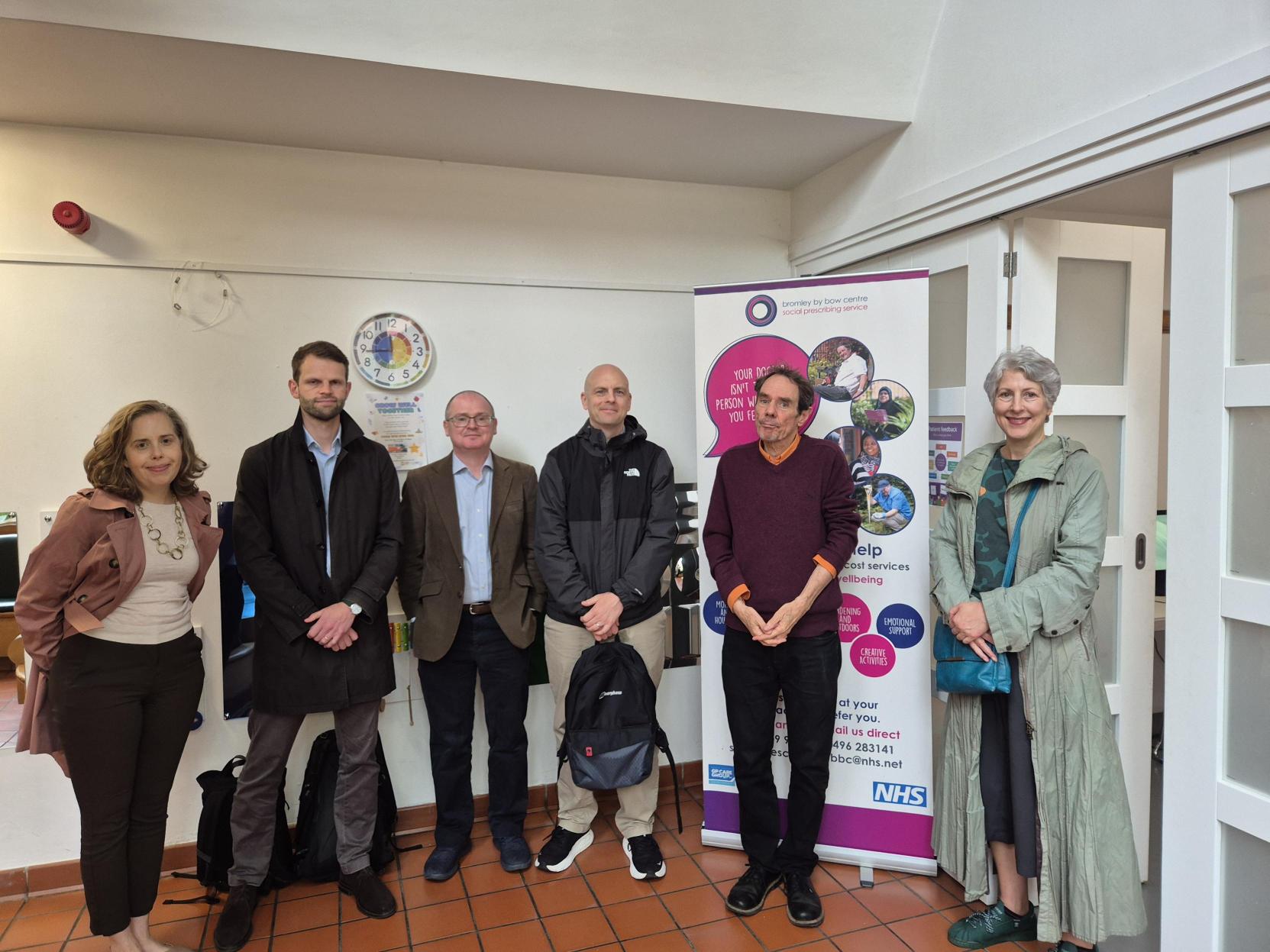
The LSB’s recent visit to the London Region Social Prescribing team showed us how legal need is often closely linked to wider social and health challenges. Social prescribing connects people to non-clinical, community-based support, because problems like housing, debt and benefits rarely exist in isolation.
This approach highlights a more holistic way of thinking about access to justice. One that focuses on people’s real lives and the wider factors shaping their ability to resolve problems.
A Community-Centred, Preventative Approach
The Bromley by Bow Centre shows how this can work in practice. Developed into a community-led hub supporting around 55,000 people, it brings together health, advice and support services in one place.
A key strength of the model is its accessibility. Locating services in familiar, trusted environments reduces stigma and makes it easier for people to walk in, with around 75% of users accessing support on a walk-in basis.
The model also places strong emphasis on early intervention. Many individuals initially come in with one problem, which often reveals a range of linked problems. By identifying these early, advisors can provide support before problems escalate into more complex legal disputes.
Understanding the Scale of Need
The discussions highlighted the significant level of unmet need across social welfare law. High levels of debt, housing insecurity and financial vulnerability illustrate the scale of the challenge facing communities.
At the same time, barriers such as low literacy, limited digital skills and fear of engaging with official systems can prevent people from accessing help. Much of the support provided involves helping individuals navigate basic processes, such as completing online forms, rather than engaging with more advanced digital tools.
These realities underline the importance of accessible, person-centred services that meet people where they are.
Prevention, Impact and System Challenges
A key part of social prescribing is its focus on prevention. By addressing problems early, services can reduce the likelihood of issues escalating, improving outcomes for individuals and reducing pressure on formal legal processes.
The impact of this work is real. The Centre tracks a wide range of outcomes, including securing significant financial gains for clients through additional benefits, demonstrating the value of early, integrated support.
Recognising the Role of Advice Providers
An important theme emerging from the visit was the role of social welfare advisers. These individuals often provide a lot of day-to-day help to some of the most vulnerable groups, yet sit outside the traditional legal profession.
Their work is central to addressing unmet legal need, particularly through early advice and practical support. Ensuring that this part of the system is better recognised will be an important consideration as the LSB sharpen its focus on identifying and mitigating risks to consumers before harm happens.
Reimagining access to justice
Social prescribing offers a powerful example of how access to justice can be achieved through collaboration, prevention and community-based support. It highlights the importance of designing services around people’s real needs and recognising the broader context in which legal problems arise.
As the legal sector continues to evolve, approaches like this provide valuable insight into how different parts of the system can work together to improve outcomes, not just for individuals, but for communities as a whole. The LSB will consult on its new three-year strategy later this year, and visits like this one help shape our thinking about what effective consumer protection looks like in practice.
More stories


