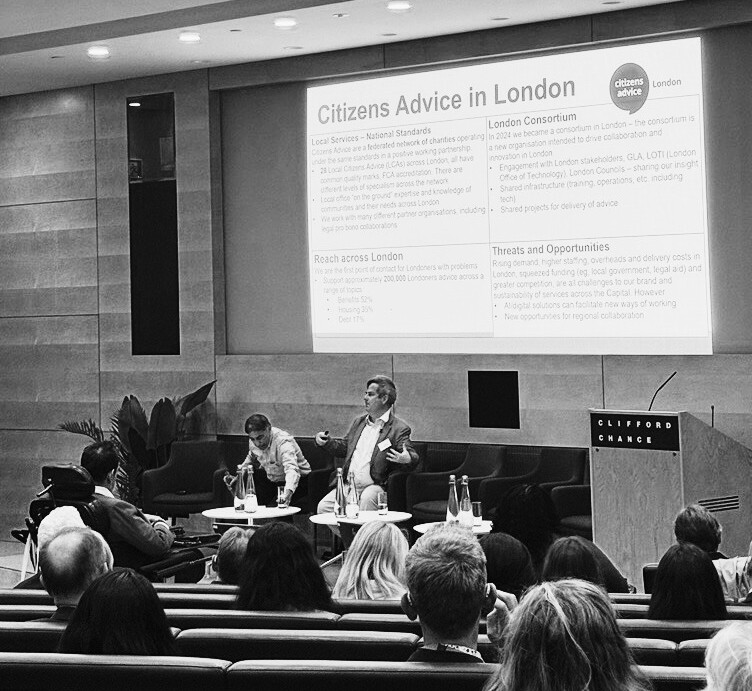
The future of legal services took center stage in September 2025 as Clifford Chance’s London office opened its doors for an evening of innovation, collaboration, and forward thinking. As part of the Legal Services Board’s “Reshaping Legal Services” series, the event brought together an eclectic mix of legal professionals, technologists, regulators, and aspiring lawyers—all united by a common question: How will AI and legal technology transform access to justice in the UK?
A Night of Innovation and Insight
The evening kicked off with three presentations that offered a fascinating glimpse into the current state of lawtech innovation.
Clifford Chance opened proceedings by sharing insights into their cross-jurisdictional approach to AI regulation. Their presentation highlighted something often overlooked in tech discussions: the critical importance of diversity in developer teams. The firm also showcased several AI-powered tools already being deployed to enhance client service delivery, demonstrating that the future of law isn’t just coming—it’s already here.
Citizens Advice London delivered a particularly compelling presentation on how AI is helping advisers navigate increasingly complex information landscapes. In an era of constrained funding, technology is proving to be a lifeline, enabling advisers to access the right information faster and serve more people effectively. Their work illustrates how AI can amplify human expertise rather than replace it.
Garfield AI rounded out the presentations with a demonstration of their debt recovery platform—a practical example of tech-enabled justice. Designed to help individuals reclaim small sums with minimal friction, the platform addresses a real access-to-justice gap where the cost of traditional legal services often outweighs the amount being recovered.
The Next Generation Weighs In
Perhaps the most energising part of the evening came during the Q&A session. Law students and early-career professionals posed thoughtful, probing questions about what their careers might look like in an AI-driven legal landscape. Their concerns were both practical and profound: How should training pathways evolve? What regulatory reforms are needed? And crucially, how can the profession ensure it remains inclusive as technology reshapes traditional roles?
These questions underscored a fundamental truth: the transformation of legal services isn’t just about technology—it’s about people. The next generation of legal professionals is eager to engage with these changes, but they need the infrastructure, training, and support systems to thrive in this new environment.
Looking Ahead
The Clifford Chance event was more than just a successful gathering—it was a glimpse of a broader conversation that needs to happen across the UK legal sector. The Legal Services Board is committed to continuing these discussions nationwide, bringing together stakeholders from all corners of the profession to shape a more accessible, efficient, and equitable justice system.
As AI continues to evolve and new technologies emerge, events like this remind us that innovation thrives on collaboration. By bringing together established firms, innovative startups, advice providers, regulators, and future lawyers, we create the conditions for meaningful change.


