On 20 January 2026, Richard Orpin, Chief Executive of the LSB, spoke at the Westminster Legal Policy Forum conference, ‘Next steps for equality, diversity and inclusion in the legal profession’. The following blog is drawn from Richard’s speech.
The LSB’s consultation on proposals to encourage a diverse profession welcomes responses from across the sector – including via this easy-access survey – and runs until 2 March 2026.
Facing persistent barriers and seizing opportunities
Despite some improvements, the legal profession does not reflect the diversity of the society that it serves. Significant barriers continue to affect entry, progression, and retention within the profession.
This isn’t just a workforce story. Consumers suffer when the profession cannot understand or meet diverse needs; unmet legal need and lower trust levels among certain groups in legal services are well evidenced.
Regulation has a vital role to play in creating the conditions for meaningful, measurable change, but current regulatory approaches have also shown limitations. Evidence shows inconsistent strategic oversight, weak evaluation practices, and limited use of diversity data to inform regulatory actions.
To address these gaps, we need a more effective oversight framework that sets clearer expectations and encourages collaborative and evidence-based interventions. That is why we are currently running a consultation on a new policy designed to help regulation drive progress in developing and sustaining a diverse and inclusive profession for all.
Our new proposals build on the work regulators have done to meet our current guidance, with the aim of supporting and strengthening approaches for continued and more effective and sustainable results in the sector.
Diversity and inclusive cultures are strategic levers for quality, innovation and resilience in legal services, not ‘nice to haves.’ A profession that reflects the society it serves builds trust, improves consumer outcomes and strengthens the sector’s contribution to the economy – for example, by widening access to talent. Diversity of talent in the legal profession is therefore both a matter of fairness and a driver of innovation, productivity, and growth.
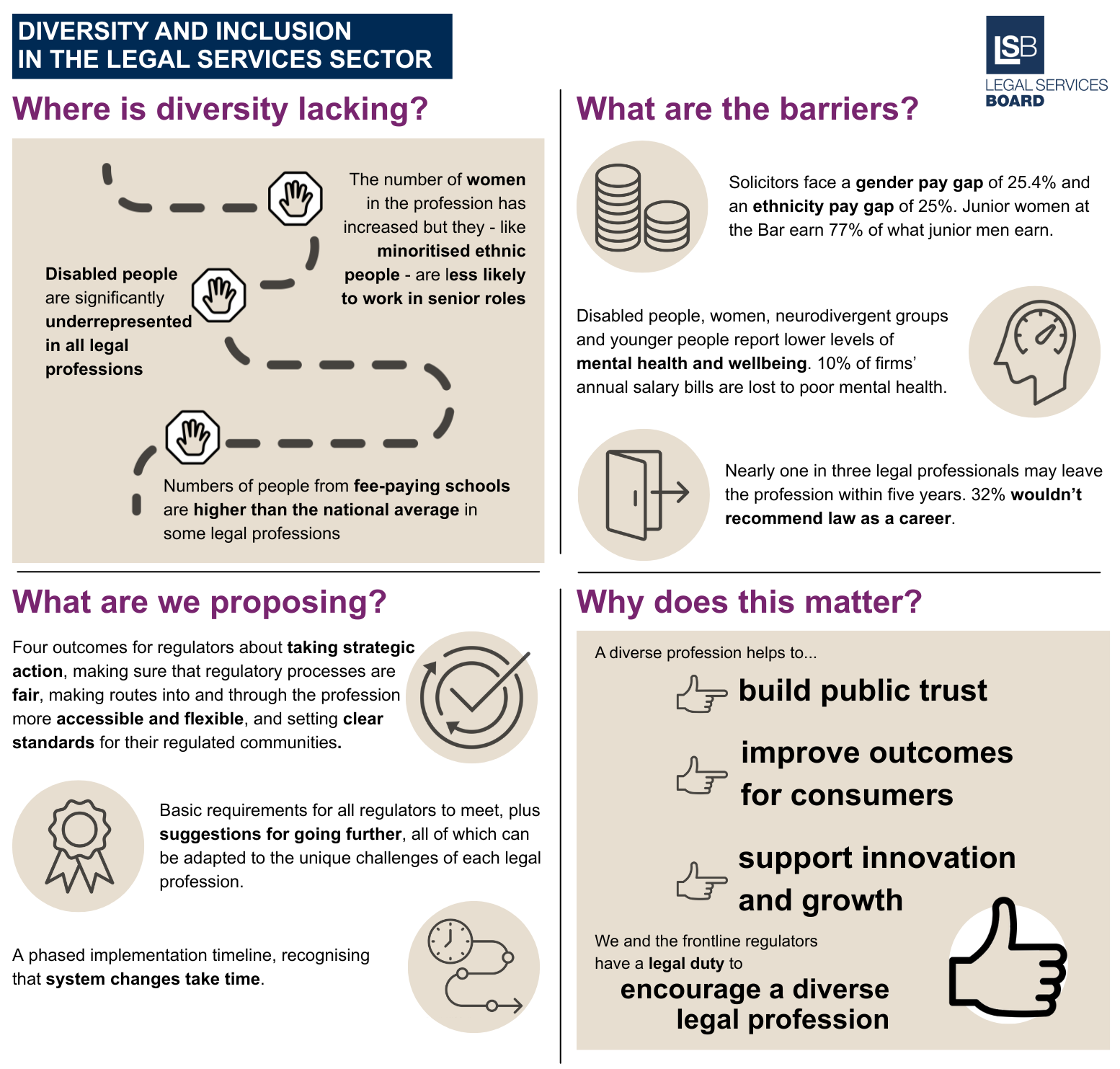
Aspiration into accountability: the LSB’s proposals
We are proposing four outcomes every legal services regulator must pursue. These outcomes are underpinned by a series of evidence-based expectations, some of which all regulators will be expected to meet, while others have been proposed to encourage regulators to go further, particularly where progress is slow or barriers are complex.
We want to see regulators:
- taking strategic, evidence-led and collaborative action
- making sure that their own processes are fair
- creating accessible pathways
- placing inclusion at the heart of professional conduct and competence.
This is about weaving EDI into the DNA of regulation so every rule, every process, every decision supports fairness and inclusion. It’s about using the levers regulators already have – standards, authorisation, enforcement – to dismantle barriers and create conditions in which talent can thrive.
Regulation alone can’t transform culture, but it can set the tone and create the conditions for change. Our proposals will provide part of the response to tackling the current barriers to encouraging a diverse profession. However, collective and intentional leadership from everyone in the sector will be needed to develop and sustain the conditions for a truly diverse and inclusive profession.
Our proposals aim to turn aspiration into accountability. They are designed to give regulators the tools and the mandate to lead. They challenge the sector to move beyond rhetoric to measurable, lasting change. And they put diversity where it belongs: at the heart of professional excellence and public confidence.
Taking ownership of the workplace cultures we want to see
Inclusive leadership is about everybody, at all levels, taking ownership of the workplace culture we’re in and the cultures we want to see.
We are inviting responses to our consultation until 2 March at 2pm. We are keen to hear from voices right across the sector. This is your chance to influence how regulators drive measurable change and create a profession that truly reflects the society it serves.

More stories